
Viten Hub
Know the research holds — before you rely on it
We make research re-runnable by anyone — and we test whether published results hold on your data. Fixed price. You get tested code, a clear verdict with its limitations, and a record you can search and find again on the open Science Live platform.
- Making research reproducible and replicable for IFREMER within the ESA GRID4EARTH project
- Winner, OpenAIRE AI Hackathon 2026 — Theme B: Build
How Viten Hub can help
Published research can look solid and still fail when someone else tries it: the result can't be re-created, or it doesn't hold on other data. We check it for you, before you rely on it.
-
A published result
A study, model or method you want to rely on — or your own work you want others to trust.
-
We re-run and test it
We rebuild the analysis and test it on your data, your region, your question.
-
A clear answer
What holds, what doesn't, and where the limits are — with code and a report you can check.
- Businesses and public agencies — before a published result goes into a product, a policy or an investment, find out whether it holds for your data, your region, your operation.
- Funders — before scaling up, get an independent check that the work you funded holds up.
- Researchers — check a result before you cite it, and make your own work easy for others to re-run.
Questions clients bring us:
- "Does this climate projection hold for our region?"
- "Does this published biodiversity finding apply to the species we manage?"
- "Before we fund phase two, does phase one hold up?"
- "Will this new method work on our data?"
- "Will our own models still run in five years, after staff have changed?"
What you get
Every Viten Hub engagement gives you:
- The research, working on your data — rebuilt so it runs end to end, in your context
- A clear verdict, with its limitations — what held, what didn't, and under which conditions, so you know exactly how far you can rely on the result
- An online report — the whole study readable in a web browser: method, figures, results and what we changed from the original, with nothing to install
- Code you can reuse and re-run — tested, documented, and archived permanently, so your team (or anyone you choose) can repeat the study years from now
- A record you can find again on the open Science Live platform — you, your colleagues and your AI assistants can search past studies and see what was checked and what was found
- Fixed price agreed up front — no scope creep, no hourly billing
€2,000 – €10,000 per study, depending on data complexity and the method involved. We agree a fixed quote in that range in writing before any work begins.
Larger engagements — several studies, ongoing support, or making a whole team's research reproducible — are quoted separately. Computing costs are always included in the quote; where it helps, we also draw on national and European computing programmes such as Sigma2 (Norway) and EuroHPC.
For technical teams: how we work →
Why this matters
Around a third of high-profile published findings don't replicate when independently retested, and much published research can't even be re-run: the code, data or environment behind it is missing or has drifted. For decisions built on those findings — regional policy, R&D investments, funded programmes — that's a quiet, expensive risk.
The existing options are slow, expensive, or both:
- Build it in-house — months of engineering effort; results stay private and walk out the door when staff change
- Wait for peer-reviewed follow-up work — 12–24 months, depends on third-party publication cycles, may never address your specific question
- Commission a traditional contract-research firm — tens of thousands of euros, deliverable is a private PDF you can't independently cite
Viten Hub turns this into a fixed-price, fixed-scope engagement delivered as evidence you can re-run, with its limits stated, and find again later. Built on the open Science Live platform — the result is yours, permanently citable, and not locked inside a private vendor system.
AI tools for research
We build open tools that let AI assistants (such as ChatGPT or Claude) work with the research record — find which studies have already been checked, what was found and with which limitations, and which software and data a paper relies on. Our Replication Radar won Theme B: Build at the OpenAIRE AI Hackathon 2026. Both tools are open source and free to use. How they work →
We can build the same for your data and your workflows.
Recent work
See all published work on the open Science Live platform →
Team
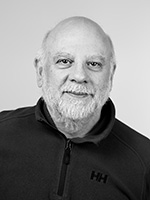
Jean Iaquinta
CEO
Scientific-computing engineer specialising in reproducible, portable and high-performance research software — from bitwise-reproducible climate models in containers to Pangeo deployments on the European Open Science Cloud. Research background in climate and environmental science.

Anne Fouilloux
Founder
25+ years preparing cutting-edge research for industry uptake.
- €8M EU project coordinator — Horizon Europe FAIR2Adapt, climate adaptation strategies
- Pangeo Steering Council — coordinating European activities and EOSC deployment in the global big-data geosciences community
- PhD Atmospheric Physics with practitioner experience at ECMWF (UK), Simula Research Laboratory, and University of Oslo
- 500+ researchers trained across Europe on big-data analysis and FAIR principles
- Contributor to EOSC-Nordic, RELIANCE, and the Pangeo community
Training and onboarding
Hands-on training for your team, from a one-day workshop to support over several months:
- Research people can re-run — organising code, data and software so results can be repeated years later
- Large climate and Earth-observation data in the cloud — working with big datasets without downloading them, using the open Pangeo tools
- AI assistants for research — using and building tools that let AI assistants search the research record
- Checking a published result — how to run a replication study from start to finish, with a clear verdict and its limitations
Quoted on request — email contact@vitenhub.no.
Get in touch
Email contact@vitenhub.no with:
- A link or PDF of the paper, model or analysis you want made reproducible or tested
- A brief description of your data — format, size, how we'd access it
- The decision the work is meant to inform
You'll get a fixed-price quote within €2,000–€10,000, agreed in writing before any work begins.